Do I throw it away or keep it?
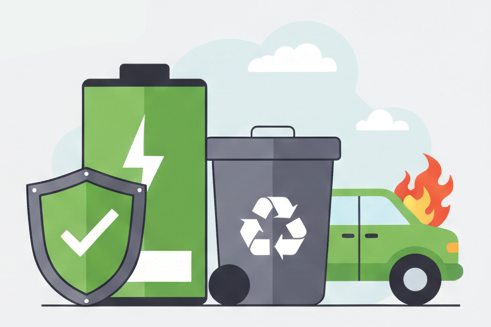
Lithium batteries must never be thrown in household waste bins or recycling bins (yellow, green, brown).
If it gets mixed with regular waste, it can be damaged, overheat, and cause fires in skips, refuse trucks, or sorting centres.
These incidents incur significant costs: replacement of lorries, plant shutdowns, repairs, mobilisation of firefighters… and these expenses inevitably end up being passed on to our taxes and local waste management charges.

Step 1: Battery Status
“Does your battery show any of these signs?”
She's got some nerve
● It's hot to the touch, even when idle
● It has an unusual smell
● She was submerged, impacted or fell violently
● She flees
● The device has suffered an impact or a small fire
Do not recharge it, and do not leave it in your home. Do not dispose of it in household waste or recycling bins, and especially not in water. If it is hot, smells, or is smoking, place it immediately outside in a non-flammable area or a fire-resistant container, and wait for it to stabilise. When it is no longer a danger, take it to a local e-waste collection point.https://www.ecosystem.eco/in a suitable bag or container. Never mail it without specific authorisation and procedures.
Step 2: Usage
“Is your battery still working normally?”
Considering reuse: second life, donation, recovery by a specialised organisationhttps://www.ecosystem.eco/).
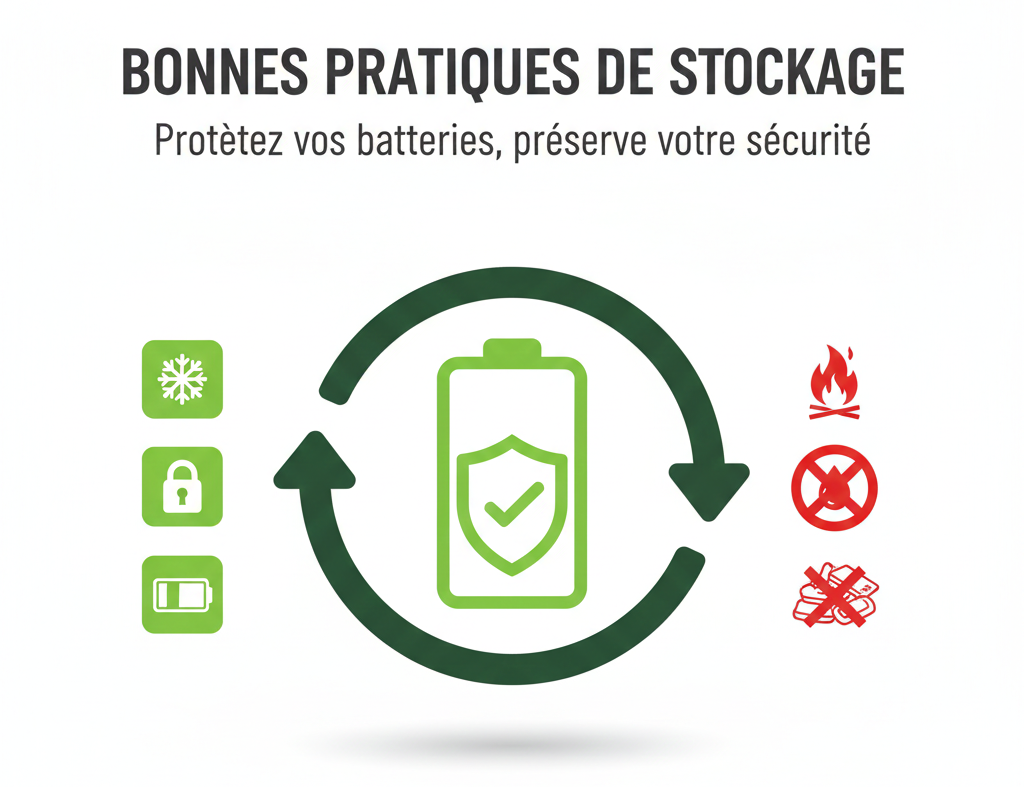
You can keep it by following good storage practices.
Recommended disposal as soon as possible at an authorised collection pointhttps://www.ecosystem.eco/), in a suitable bag or container. Never put it in the bin.
In Brief: The Right Steps
Damaged battery
Urgent evacuation to an approved point.
Functional but useless battery
Reuse, donation, or disposal through the specialised channel.
Used but stable battery
Deposit at a traditional collection point.
Built-in battery
In-store deposit (buy-back obligation), at a waste disposal centre or approved facility.