Your batteries and after

Dangers of lithium batteries

Lithium-ion batteries are efficient, but they present specific risks when damaged, mismanaged or improperly sorted.

Thermal runaway

⚠️ This is the phenomenon the most critical. ⚠️

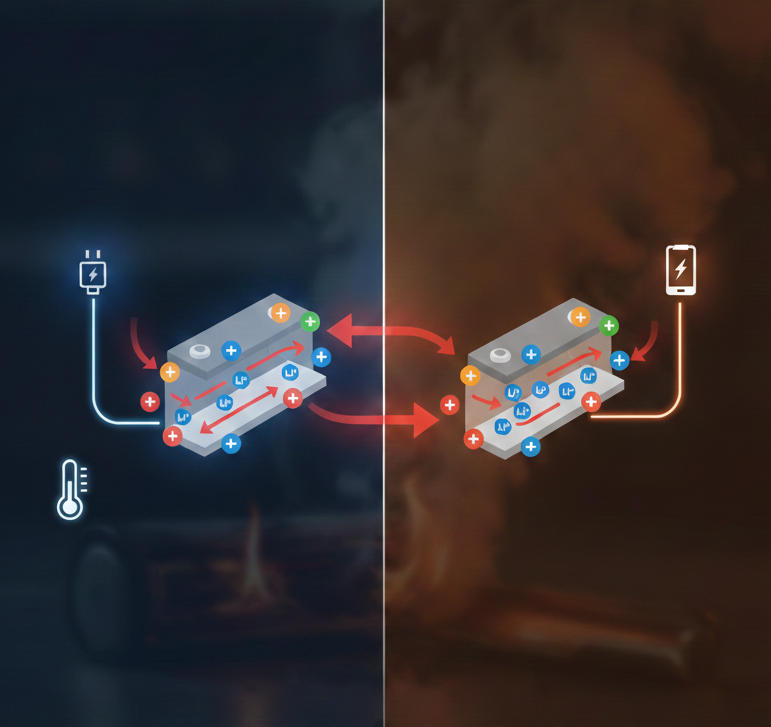
Definition : An internal chain reaction that increases the cell's temperature until it reaches a point where the heat produced exceeds the heat dissipated, leading to a fire or explosion.

Possible triggers:

• Overload or overheating
• Shocks, perforations, aging
• Manufacturing defects

Physical mechanism:

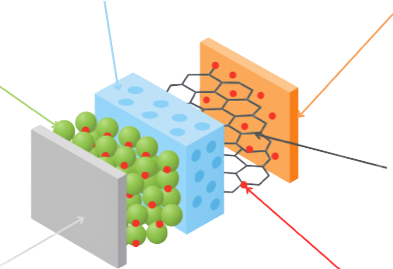
1. Rupture of the SEI* layer on the anode

2. Separator degradation → internal short circuits

3. Exothermic reactions + gas release

4. Electrode ignition

*SEI: The SEI, or solid interphase electrolyte, is a thin film that forms on the anode of a battery during early charging. It allows lithium ions to pass through while blocking electrons, preventing electrolyte breakdown. This layer is essential for the performance, safety, and longevity of lithium batteries by stabilizing internal reactions. 
Internal short circuits

They occur when the separator is damaged (impact, manufacturing, aging), causing direct contact between anode and cathode.

Consequences :

  • Localized warm-up
  • Triggering of a thermal runaway

Oxygen diffusion

Certain electrode chemistries (particularly those rich in nickel or cobalt) can release oxygen at high temperatures.

Effects:

  • Accelerates combustion
  • Feeds the flame in case of fire

Chain reactions

When a cell enters thermal runaway, the heat spreads to neighboring cells.

Results :

  • Thermal propagation
  • Battery pack fire

Diffusion of toxic gas

When the battery experiences thermal runaway or severe degradation, the electrolyte and electrode materials decompose, releasing a mixture of flammable and toxic gases.

Effects:

  • Acute toxicity (HF, CO, aldehydes).
  • Severe respiratory irritation (HF, formaldehyde).
  • Risk of explosion (H₂, methane, ethane).
  • Increase in internal pressure → risk of cell bursting and projection of incandescent material. .
Scroll to Top