
Regulation
Batteries are not ordinary waste.
Even when used, they can present significant risks Fire, explosion, soil and water pollution, harm to people. This is why their marketing, collection, storage, transport and treatment are strictly regulated by European and French legislation.
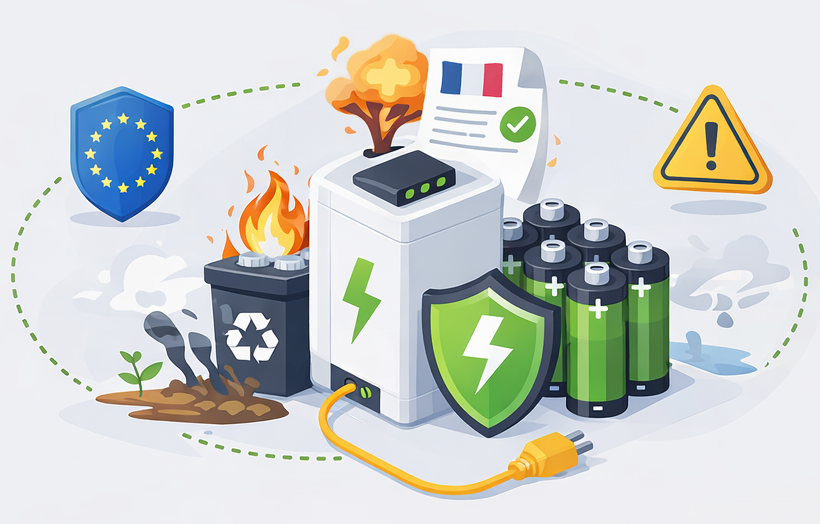
The French framework: batteries classified as “regulated waste”
According to the Environmental Code, A used battery is a regulated hazardous waste. This implies obligations for each actor:
- It is forbidden to throw a battery in the trash or recycling bins.
- Mandatory drop-off at a store, recycling center, or collection point of an eco-organization
- Key role in fire prevention in dump trucks and sorting centers
- Criminal liability may be incurred in the event of a fire starting due to improper sorting.
- Mandatory use of approved operators (eco-organizations)
- Free collection of used batteries
- Obligation to inform the public
- Secure storage: isolated terminals, limited volumes, short-circuit prevention
- [Battery classification - Ministry of Ecology] Sorting batteries by type
- Secure storage (fire/explosion risk)
- Traceability of waste streams
- Mandatory use of approved operators
- Possible classification under ICPE regulations depending on activity and quantities
- Subject to ADR regulations (dangerous goods)
- Requirements: compliant packaging, regulatory labeling, specific documentation, trained personnel
The European framework
THE Regulation (EU) 2023/1542 is the central text which sets the requirements for all batteries placed on the market:
- Mandatory traceability from design to destruction (life cycle monitoring)
- Separate collection and prohibition of mixing with regular waste
- Safety standards for manufacturing and storage
- Extended Producer Responsibility (EPR): manufacturers must finance the collection, processing, and inform users
This framework aims to reduce industrial risks and strengthen a reliable recycling sector.
In summary
The regulations aim to:
To ensure a reliable recycling system, traceable and mandatory
Preventing fires in sorting facilities
Protect the environment direct and indirect pollution
Secure storage and transport
Ensure that risks are taken into account at every stage of the product lifecycle